
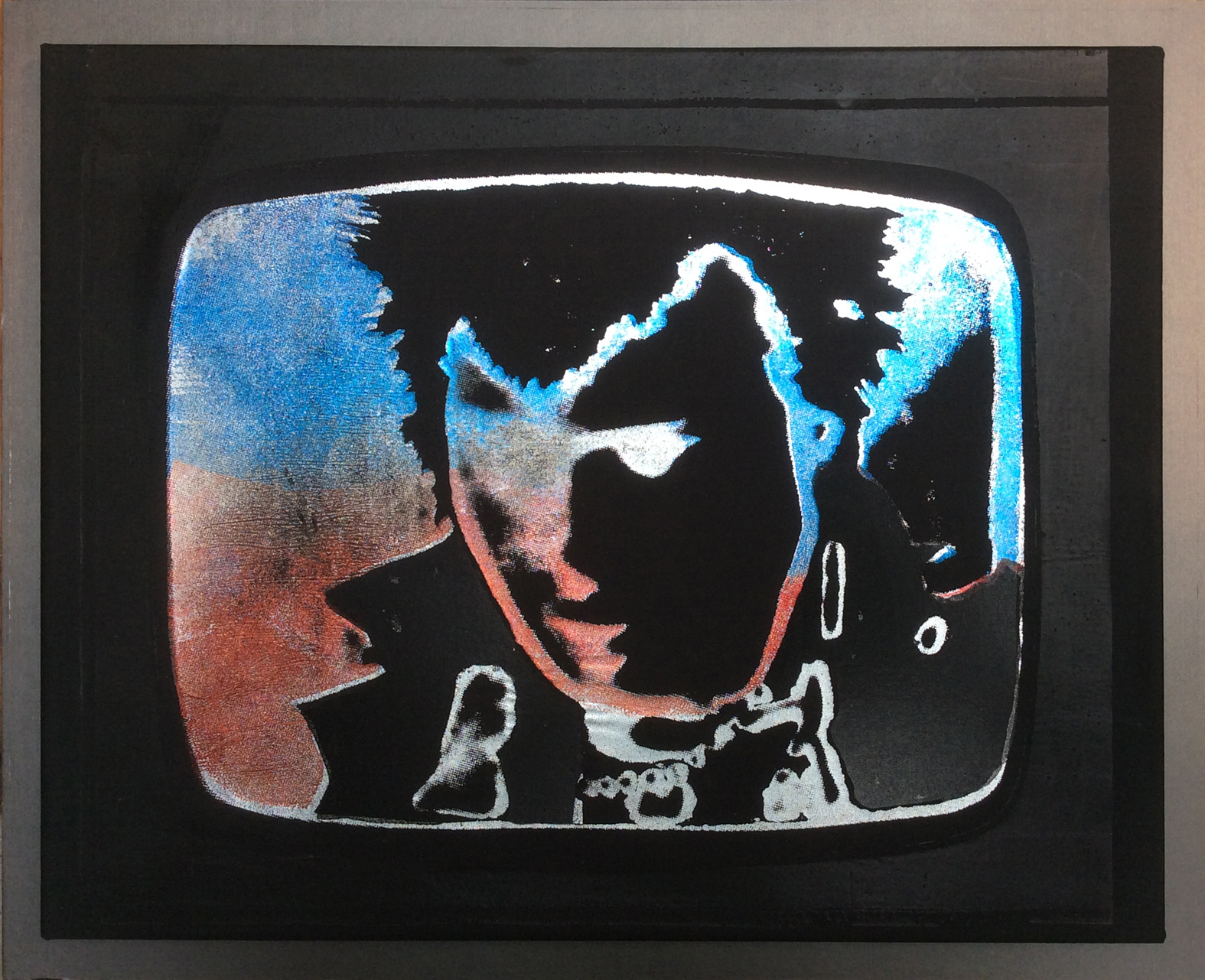
SID Negative TV
Baudrillard refers to a hyperreality – “A world in which the piling up of signs, images and simulations through consumerism and television result in a destabilised, aestheticized hallucination of reality”.
Television – a window of the world. TV – its as if you are looking out of a window in a house, except you can choose from hundreds of windows in the world to look out of. The boundaries between reality and fiction are becoming increasingly blurred, so it may need a little more than a fleeting glance to see the story beyond the frame. The repetition of advertising, news and re-run programming, breeds a kind of subliminal familiarity with all kinds of imagery that may or may not sit comfortably with our senses but still claim a place in our perception of things. Perhaps our ‘window on the world’ is more real because, in life, the boundaries between reality and fiction are getting closer – anything that can be imagined will become a reality.
We find that continual photographing of images from television expands our field of references where an image can be frozen – drawn from the global window. Somehow the effervescence of the TV screen lifts the image like a time machine and places it firmly in the present.
The TV prints grew out of photographs made from news features where the content was often diametrically opposed to the elements of human interest to be found in the feature – sometimes about the death of someone who represented a diverse philosophy or an extreme cultural movement such as Communism in China or Punk Rock in England.
‘The Death of Sid’ Vicious was brimming with pathos but compressed within this hyper-reality previously created by the mass-media and branded into our subconscious. A monumental ending. The bleached out negative was an image that had the symbolism and sadness of his death. The photograph was taken as Sid Vicious answered the interviewer “Where would you rather be right now?” – “Under the ground”.